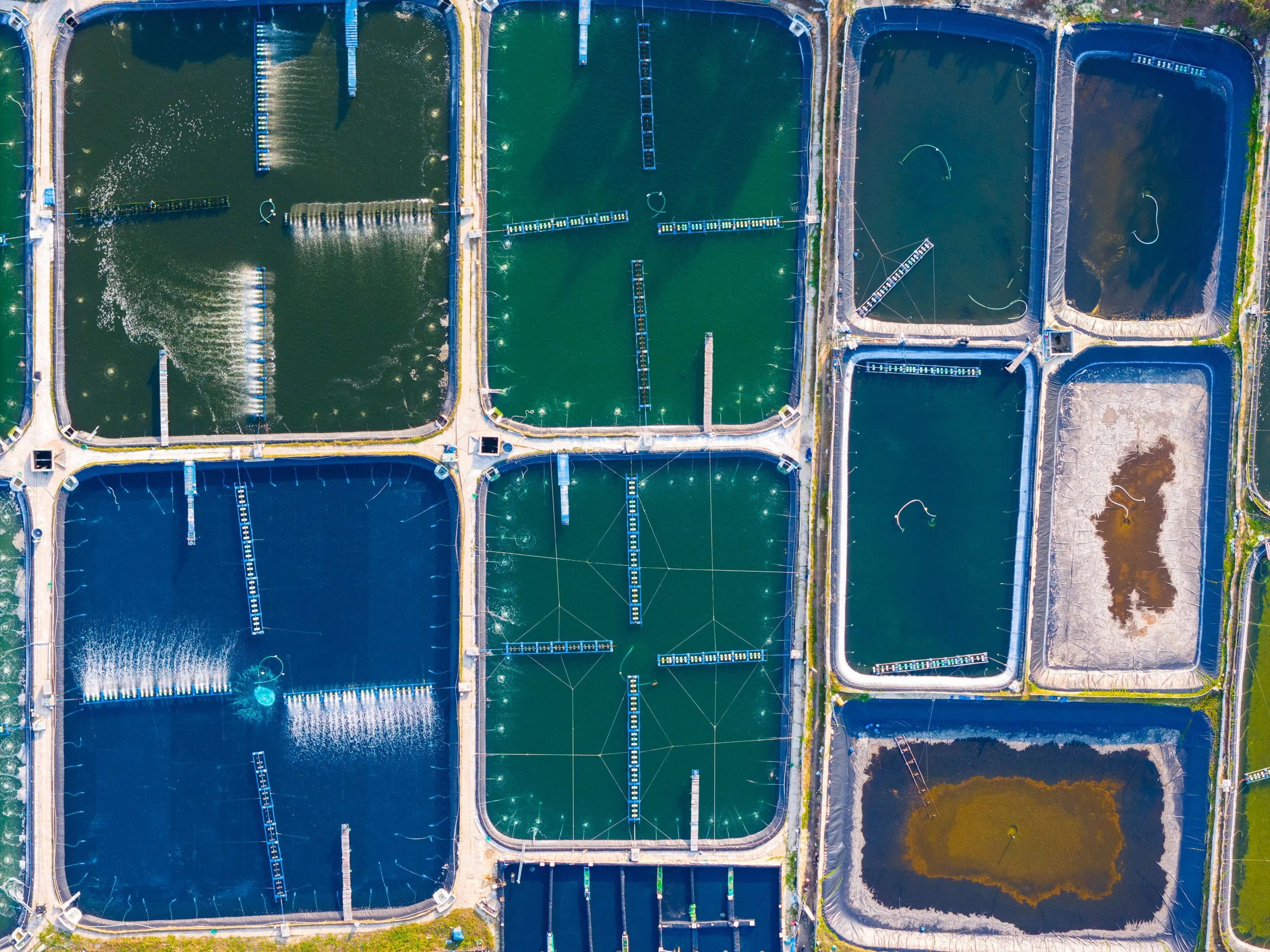
Aquaculture in Vietnam
Earlier this year, our scouting at Monsoon Ventures turned up a fertiliser venture spun out of a Malaysian university. The science had been two decades in the making: its founder, a soil scientist with a doctorate in land management and more than a thousand citations to her name, had worked out how to turn waste streams into crop inputs. She had field tested it on maize, chilli, sweet corn, tea and banana, with one trial co-funded by a commercial farm.
On paper, the venture had a lot going for it. What it lacked was a commercial co-founder, a business model and any clear picture of who would buy the product, and the pathway for moving the intellectual property out of the university had not been settled. When we reached out, she was keen to talk but could not speak to anyone external while negotiations with the university continued.
Investment alone would not have solved her problem. She needed help building a company around her science, and in most of the Southeast Asia's innovation systems, that job belongs to no one in particular. Universities manage research and licensing, investors look for companies that already exist, and accelerators mostly work with founders who have found their market.
We see versions of this story in our pipeline more often than any other.
Southeast Asia is investing heavily in research
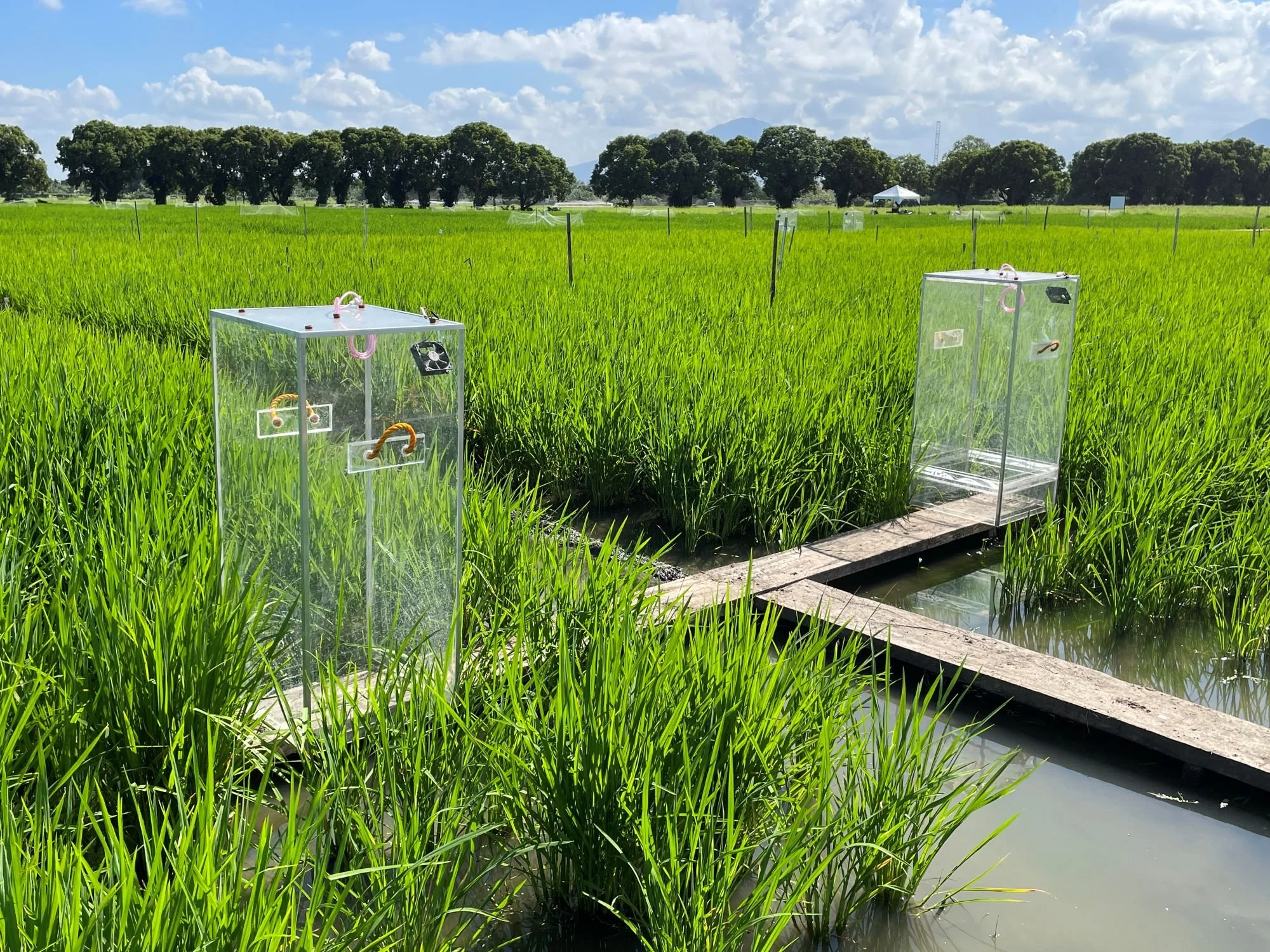
An IRRI research project into low emissions rice cultivars
When agritech funding in Southeast Asia fell after its 2022 peak, a common assumption was that the technology was not good enough to be funded. However, that does not match what we see in our pipeline. The region's six largest agrifood markets now put roughly USD 10 billion a year of public money into research. Across the wider continent, Asia's share of global R&D spending has grown from around 23 per cent in 2000 to about 45 per cent in 2024, according to WIPO. In Indonesia, intellectual property applications rose 4.5 times between 2015 and 2024, according to the Directorate General of Intellectual Property. Three of the world's leading agricultural research centres, IRRI, WorldFish and CIFOR-ICRAF, are headquartered in the region. By any of these measures, Southeast Asia does not lack good science.
The pathway from lab to market is still being built
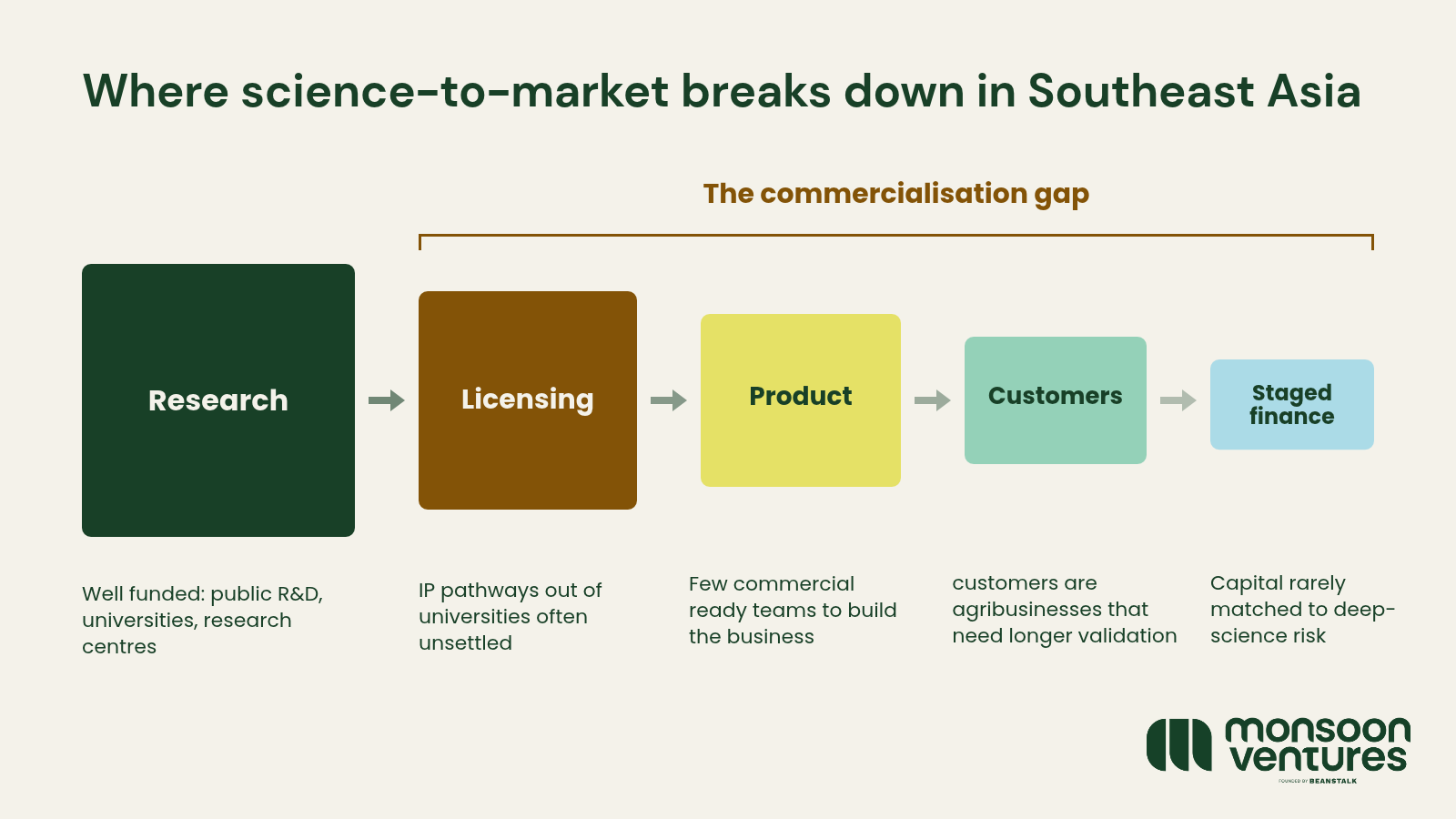
Southeast Asia funds research well, but each later step in the path to market has less support. Source: Monsoon Ventures analysis.
Before a university discovery becomes a company that can grow, it has to be licensed, developed into a product, matched with customers and financed through several stages of risk. Each step needs people, capital and institutions built for the job, and across most of Southeast Asia the research side of that system is far better resourced than the commercial side.
Singapore, the region's most developed innovation hub, shows both the progress and the shortfall. Its public research sector filed 854 patent applications in 2023, while private-sector filings nearly tripled over the previous decade. Yet deep tech, the category most science-based startups fall into, attracted 24.7 per cent of Singapore's venture deal value in 2025, up from 11.1 per cent in 2022, according to Enterprise Singapore, and much of that funding has gone to biotech. The government's Research, Innovation and Enterprise 2030 plan (RIE2030), its national five-year research strategy, commits S$37 billion between 2026 and 2030. By one analysis, around 20 per cent of that, or S$7.5 billion, sits in the innovation and enterprise stream that funds research translation, venture building and deep tech clusters.
Other governments are starting to build similar institutions, and Vietnam has moved quickly. Politburo Resolution 57-NQ/TW, issued in December 2024, made science, technology and innovation a national priority. Decree 264/2025/NĐ-CP followed in October 2025, establishing a National Venture Capital Fund and local funds that can co-invest alongside private capital.
These commitments are building a deep pool of science with commercial potential. The harder task, and the one Monsoon Ventures was set up for, is turning it into growth companies that work out their scale economics early and have credible exit pathways across the region's fragmented markets.
Why the region's digital success has not carried over
Southeast Asia does know how to commercialise technology. Its digital economy grew gross merchandise value 7.4 times over the past decade to more than USD 300 billion, supported by roughly USD 120 billion in private capital, according to the e-Conomy SEA 2025 report by Google, Temasek and Bain. Along the way it built a strong network of accelerators, venture funds and operators who know how to scale consumer technology.
That network was designed for businesses with near-zero marginal costs, fast product cycles and customers reachable in their millions through a smartphone. Science-based agriculture needs more capital up front, takes years to validate, and sells to farmers and food processors rather than urban consumers, so the approach does not transfer well. The digital sector's success has made it easy to assume the region is equally good at commercialising deep science, when the institutions for doing so are still missing.
Until recently, most people asked to name a Southeast Asian agtech success would have said Indonesia's eFishery, which collapsed in 2025 amid a fraud investigation that led to the arrest of its founder. Even before that, it was never a science commercialisation story; its model layered hardware and financing over existing aquaculture practice.
Malaysia's Qarbotech offers a more useful example. It grew out of Universiti Putra Malaysia in 2018, built on Dr Suraya Abdul Rashid's carbon quantum dot technology, which helps plants capture more light. Her commercial co-founder, Chor Chee Hoe, met her through an academic collaboration in 2020 and joined in 2021. For around three years a validated technology waited for someone to take it to market, and that person arrived through circumstance rather than any system designed to make the match.
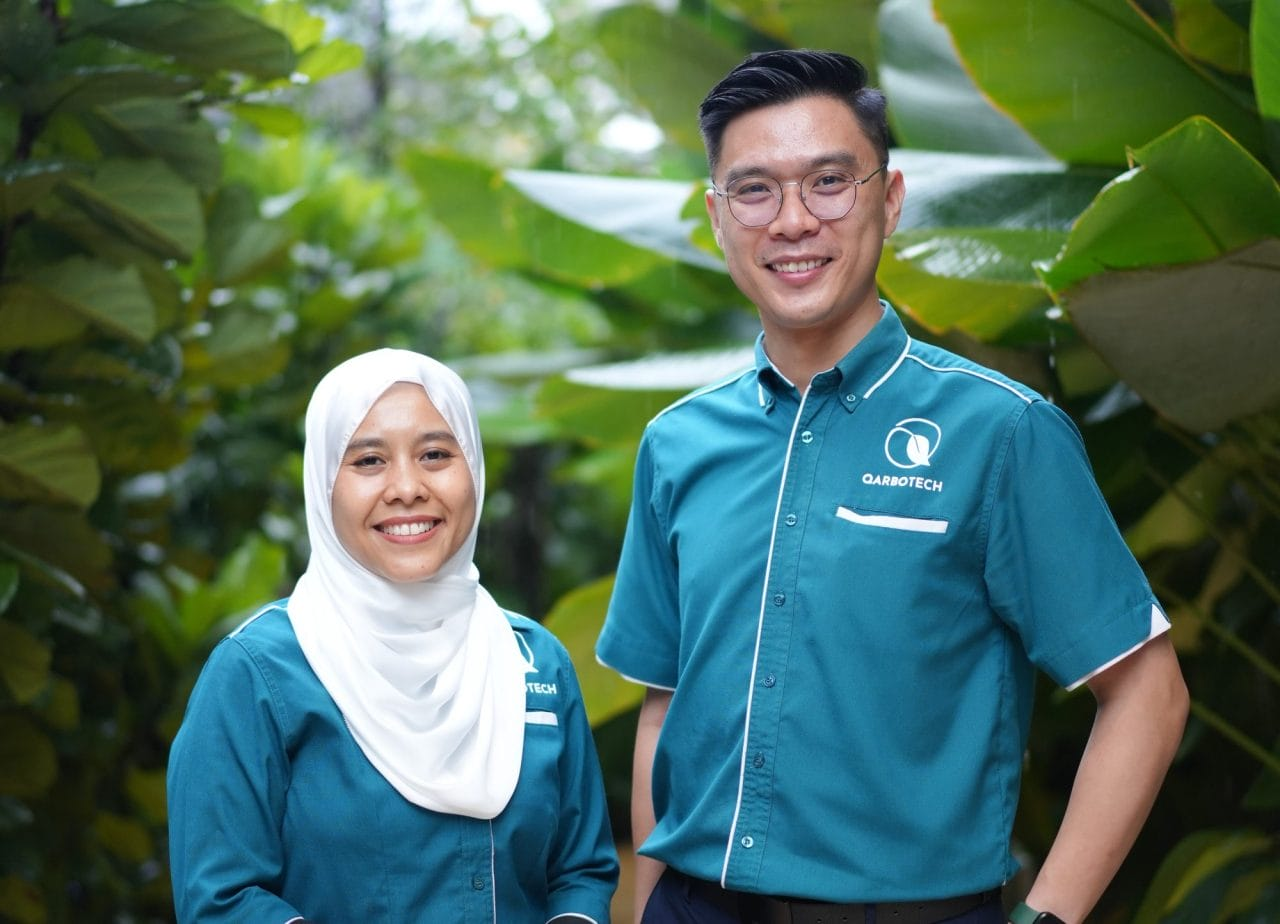
Dr. Suraya Abdul Rashid, Chief Scientist and founder, Chor Chee Hoe, CEO and co-founder Qarbotech
What could close the commercialisation gap
In our view, three things would help more research like this reach the market, and capital is only one of them.
The first is commercial leadership placed alongside technical founders early and funded properly, so that whether a venture gets off the ground does not depend on luck.
The second is a route to market that works backwards from a specific acquirer or distribution partner. Corporate acquisitions account for roughly three quarters of agritech exits in the region since 2020, according to Beanstalk and Briter’s recent report, The Opportunity for AgriTech Investment in Southeast and South Asia, so these partners need to be involved from the first year rather than approached only when founders are ready to sell.
The third is capital structured around each venture's actual risk profile, blending concessional, philanthropic and commercial money rather than waiting for one type of investor to price a risk it was never designed to carry.
We expect to refine this view as we learn, but the size of the opportunity is becoming clearer. In The Opportunity for AgriTech Investment in Southeast and South Asia, we found that rice paddy yields in Vietnam and Thailand were 63 per cent and 39 per cent below the average of the world's three highest-yielding rice producers outside the study region - Australia, Tajikistan and Uruguay. These are country examples rather than a regional average, but they show the room to lift productivity.
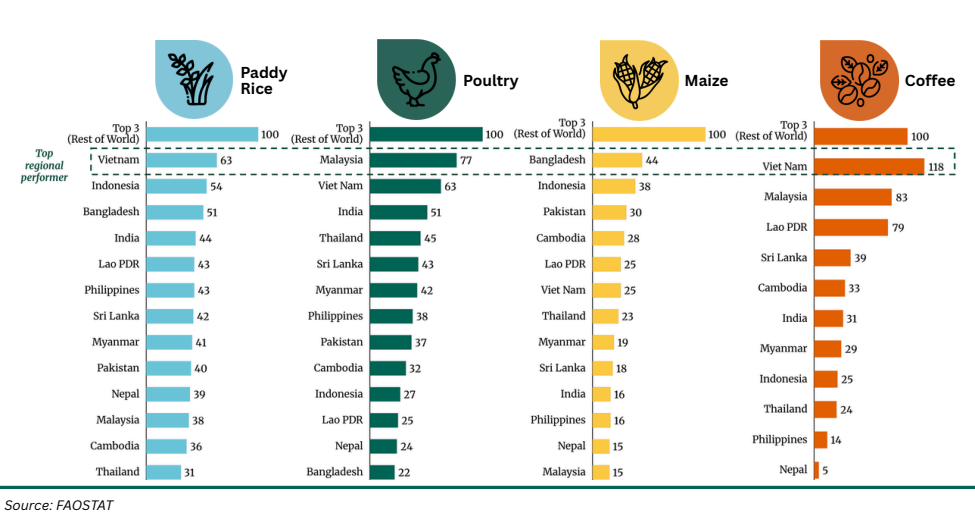
Southeast Asian producers are commonly 2-6x less productive than leading global benchmarks in core commodities, with some outperforming exceptions. Productivity index for Southeast Asian producers is relative to average of top 3 countries in the rest of the world. Top 3 for rice: Australia, Tajikistan, Uruguay. From The Opportunity for AgriTech Investment in Southeast and South Asia
Climate change will make that harder. Rice yields fall by around 6 per cent for every 1°C rise in daytime temperature above the optimum, and by 7 per cent for every 1°C at night, according to a 2023 meta-analysis. Projections suggest major rice-growing regions in both countries, including north-east Thailand and Vietnam's Mekong and Red River deltas, will see more than 100 days a year above 35°C. The yield gap and heat losses are measured differently and cannot be added into a single number, but both point the same way. Without heat adaptation, the distance between the region's rice yields and those of the best producers is likely to grow.
Narrowing that gap while protecting future yields would make a material difference to the livelihoods of the region's roughly 100 million smallholder farmers. For impact investors asking how validated but idle university science can become companies capable of that, Monsoon Ventures is our answer, and we would welcome the conversation.